Információs Társadalomért Alapítvány
  • Home
  • About us
    • News
    • Curatorium
    • Associates
    • Partners
    • References
    • Statement of Data Protection
    • Press room
    • Contact
  • Research Institute
    • Research
    • Research groups
    • Publications
  • Projects
    • Research Projects
    • Call Projects
    • Heritage Protection Projects
    • Information and Other Technological Projects
    • Information and Knowledge Management Projects
  • Services
    • Education
    • Labour Force Market Services
    • Kutatási, fejlesztési és innovációs szolgáltatások
    • Consultancy
  • Publications
    • Alma Mater study series
    • Smart Business Management series
    • Other publications
    • Newsletter
  • Contact
  • Click to open the search input field Click to open the search input field Search
  • Menu Menu

The Qualification and Skills’ Passport (QSP) project

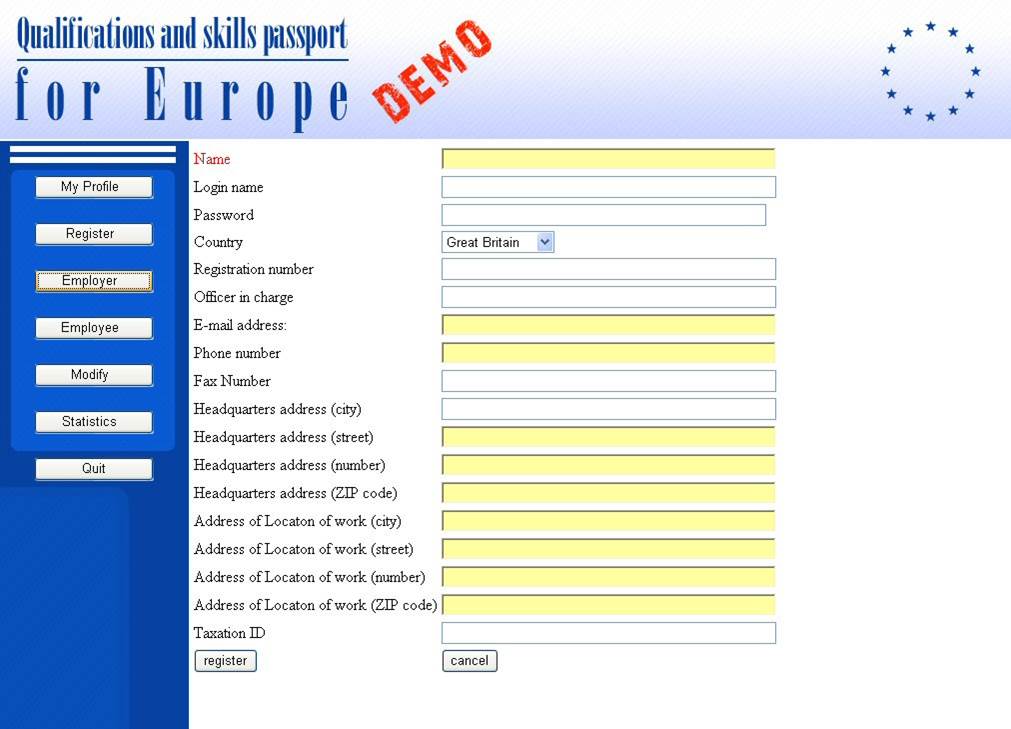
The Qualification and Skills’ Passport (QSP) project aims at the build-up of a unified platform for the support of workforce migration inside the European Community in the hospitality sector with the mobilization of up-to-date IT solutions and in strong coordination with the already present efforts of the Community (mainly the EURES network and the Europass system).

The QSP project is a joint effort of the organizations HOTREC (It is the trade association of hotels, restaurants and cafés in the European Union.) and EFFAT (European Federation of Food, Agriculture and Tourism Trade Unions), the Tourism Policy of the EU and the World Tourism Organization.

The QSP project aims at the support for the better flow of information between employers, employees. contributes to the decision making process of employers, collects and distributes up-to-date and reliable job market information, concerning different skills, experiences and competences of employees that are well defined; as well as the specified global, unified database of jobs with well organized, searchable and verified content. It is an application of up-to-date “semantic” and distributed computing solutions Solutions for problems arising from localization and language differences). Enhancement of the coordination of education and special training systems of countries and regions.

The results of the project were a final model of the QSP; skills’ lists for each area of services in the hospitality sector, translated into the languages of the pilot countries; study on the handling of personal data and on technical issues; identification of the countries interested in participating in the experimentation phase of the QSP: Italy, Hungary, Malta, Spain; established contacts with Commission services in charge of other European instruments on qualification and training (DG EAC, CEDEFOP).

The next steps will be the experimentation of the QSP in the 4 pilot countries. Based on the results of the project the follow up would encompass e.g.: the setting up of a host server for the QSP; the setting up of national QSP help desks; the training on the running of the QSP system; the dissemination of the information about the QSP to workers and employers/companies in the hospitality sector; the testing of the QSP in the field; the improvement of the QSP based on the experience; suggestions for the rolling out of the QSP to more countries or in other contexts.

Related materials

EFFAT

HOTREC

About the QSP project in OECD Tourism Trends and Policies 2012 (p91.)

Publications:

  • Kiss Ferenc: Kompetenciahálózatok alkalmazása az EU munkaerőpiacán. Magyar Tudományos Akadémia Tudásmenedzsment Workshop, Gödöllő, 2008. március 28.
  • Kiss Ferenc – Váradi Márk: Ontology Based Quality and Skill Administration Supporting European Labour Mobility. 30th International Conference on Information Technology Interfaces, Cavtat/Dubrovnik, Horvátország, 2008. június 23-26. (poszter)
  • Kiss Ferenc: European Qualification and Skills Passport – an Internet based solution. „Társadalom és Gazdaság – új trendek és kihívások” Nemzetközi Tudományos Konferencia. Baja, 2008. szeptember 19. In: Kovács Beatrix (szerk.): Társadalom és gazdaság – új trendek és kihívások. Eötvös József Főiskola Műszaki és Gazdálkodási Fakultás Gazdaságtudományi Intézet, Baja, 2008. pp. 357-360. (ISBN:978-963-72909.
  • Kiss Ferenc: European Qualification and Skills Passport – an Internet based solution. In: Noszkay, E. (ed.): The capital of intelligence – the intelligence of capital. Foundation for Information Society, Budapest, March, 2009. ISBN: 978 963 87788 2 6. pp. 167-176.

  • Research Projects
    • ARRADIC
    • Developing AI-based methods to support the innovation capabilities of SMEs
    • Development of a knowledge-based company valuation model
    • Development of a knowledge-based competitor evaluation method
    • Digital archiving and document management
    • Electronic Archives
    • ICHEPIS – Inventorisation for a Cultural Heritage Periodic Reporting Information System
    • Methodology of a Simulation Modelling for Memetics by Knowledge Attributed Petri Nets
    • Regional Well-being Research Project KTIA
    • The Development of PEN (Productivity Effectiveness Navigator), a decision supporting software
    • The effects of IT and network vulnerabilities on economy and society
    • The impact of AI on the labor market
    • The Rural Farm House Museum Network project
  • Call Projects
    • HU-SK Jointly for a common language
    • ICHEPIS – Inventorisation for a Cultural Heritage Periodic Information System
    • MENET – eMagyarország Program
    • Regional Well-being Research Project KTIA
    • TÁMOP-2.2.4-11/1 – Joint knowledge for the success of entrepreneurships along the border
    • TÁMOP-2.6.2-12/1-2012-0360 Jointly on the labour force market
    • The Development of PEN (Productivity Effectiveness Navigator), a decision supporting software
    • The effects of IT and network vulnerabilities on economy and society
  • Heritage Protection Projects
    • ARRADIC
    • Curators Behind Closed Doors – Exhibition-Making Game (Museum of Ethnography, Budapest)
    • Digital archiving and document management
    • Digital Museum Tools for the Vasparipa Play Park
    • Heritage of Serbs in Deszk – Cemetery digitization project
    • ICHEPIS – Inventorisation for a Cultural Heritage Periodic Information System
    • Interactive technical history exhibition in the Central Museum of Mining
    • Keep calm! – Patience Bottles (Touchscreen Application and Online Experience)
    • Museum of Óbuda – exhibition digitalisation
    • Paprika Jancsi – an Interactive Touchscreen Experience for the “Kalocsa’s Gold – Paprika” Exhibition
    • The Rural Farm House Museum Network project
    • „Country Heritage Routes” – Baranya County Rural Tourism Public Utility Association
  • Information and Other Technological Projects
    • ARRADIC
    • Electronic Archives
    • Global E-learning Technology – GET
    • HU-SK Jointly for a common language
    • Intelligent hotel
    • Interactive technical history exhibition in the Central Museum of Mining
    • MENET – eMagyarország Program
    • The Development of PEN (Productivity Effectiveness Navigator), a decision supporting software
    • The Technology of the QR Code Based Audioguide System
  • Information and Knowledge Management Projects
    • Developing AI-based methods to support the innovation capabilities of SMEs
    • Development of a knowledge-based company valuation model
    • Development of a knowledge-based competitor evaluation method
    • Digital archiving and document management
    • Electronic Archives
    • Establishing a knowledge base managing technology for call-center environment
    • Global E-learning Technology – GET
    • Heritage of Serbs in Deszk – Digitization project
    • HU-SK Jointly for a common language
    • ICHEPIS – Inventorisation for a Cultural Heritage Periodic Information System
    • Intelligent hotel
    • Interactive technical history exhibition in the Central Museum of Mining
    • Labour force optimisation
    • MENET – eMagyarország Program
    • Methodology of a Simulation Modelling for Memetics by Knowledge Attributed Petri Nets
    • Museum of Óbuda – exhibition digitalisation
    • Regional Well-being Research Project KTIA
    • TÁMOP-2.6.2-12/1-2012-0360 Jointly on the labour force market
    • The Development of PEN (Productivity Effectiveness Navigator), a decision supporting software
    • The effects of IT and network vulnerabilities on economy and society
    • The elaboration of a business and IT model of the loyalty program that can be used in the hotel sector on middle term
    • The impact of AI on the labor market
    • The Qualification and Skills’ Passport (QSP) project
    • The Rural Farm House Museum Network project
    • „Country Heritage Routes” – Baranya County Rural Tourism Public Utility Association

Copyright © 1998-2026
Foundation for Information Society

Scroll to top Scroll to top Scroll to top

This site uses cookies. By continuing to browse the site, you are agreeing to our use of cookies.

OKLearn more

Cookie and Privacy Settings


How we use cookies

We may request cookies to be set on your device. We use cookies to let us know when you visit our websites, how you interact with us, to enrich your user experience, and to customize your relationship with our website.

Click on the different category headings to find out more. You can also change some of your preferences. Note that blocking some types of cookies may impact your experience on our websites and the services we are able to offer.

Essential Website Cookies

These cookies are strictly necessary to provide you with services available through our website and to use some of its features.

Because these cookies are strictly necessary to deliver the website, refusing them will have impact how our site functions. You always can block or delete cookies by changing your browser settings and force blocking all cookies on this website. But this will always prompt you to accept/refuse cookies when revisiting our site.

We fully respect if you want to refuse cookies but to avoid asking you again and again kindly allow us to store a cookie for that. You are free to opt out any time or opt in for other cookies to get a better experience. If you refuse cookies we will remove all set cookies in our domain.

We provide you with a list of stored cookies on your computer in our domain so you can check what we stored. Due to security reasons we are not able to show or modify cookies from other domains. You can check these in your browser security settings.

Other external services

We also use different external services like Google Webfonts, Google Maps, and external Video providers. Since these providers may collect personal data like your IP address we allow you to block them here. Please be aware that this might heavily reduce the functionality and appearance of our site. Changes will take effect once you reload the page.

Google Webfont Settings:

Google Map Settings:

Google reCaptcha Settings:

Vimeo and Youtube video embeds:

Accept settingsHide notification only